Home›Treatments›Laser Toning
Laser Toning
Low-fluence 1064 nm, for melasma and pigment that creams alone will not shift.
Book a consultationWhat is Laser Toning
Laser toning uses a 1064 nm Q-switched Nd:YAG laser at deliberately low energy, spread over a large spot. Rather than shattering pigment in one aggressive pass, it lowers it a little at a time across a series of sessions.
The endpoint during treatment is faint redness, not crusting. Most people go back to their day immediately and can wear makeup the same afternoon.
That gentleness is the point. Melasma reacts badly to aggressive treatment — heat and inflammation can make it worse. Toning is designed to work below that threshold.
It manages melasma rather than curing it. Melasma is a chronic condition that recurs, so we plan for maintenance and daily sun protection from the first visit, not as an afterthought.
Laser toning vs single-pass laser
Compare Treatment Guide
Two ways to use the same wavelength. They suit different problems, and choosing wrongly is how melasma gets worse.
Laser Toning
Energy
Low fluence, large spot
Sessions
Usually 5 to 10, spaced 1–2 weeks
Downtime
None. Faint redness for about an hour
Best for
Melasma, uneven tone, overall dullness
Single-pass Q-switched
Energy
High fluence, small spot
Sessions
Often one or two
Downtime
Darkening then crusting, about a week
Best for
Discrete sun spots, freckles, lentigines
01
Treatment Process
Treatment areas
Treatment schedule
-
Consultation
Your skin is examined under magnification. Melasma, sun damage and post-inflammatory pigment look similar and are treated differently.
-
Settings and test
Spot size and energy are set for your skin. We start conservatively and adjust upward, never the other way round.
-
The session
Roughly 15 to 20 minutes of passes across the area. The endpoint is faint redness and a warm feeling, not pain.
-
Interval and review
We leave one to two weeks between sessions and review the result before booking the next. Longer gaps lower the risk.
Recommended for
- Melasma that has not responded to topical treatment alone
- Uneven tone or dullness where no single spot is the problem
- Anyone who cannot take a week of crusting and needs no downtime
02
Why Maylin for pigment
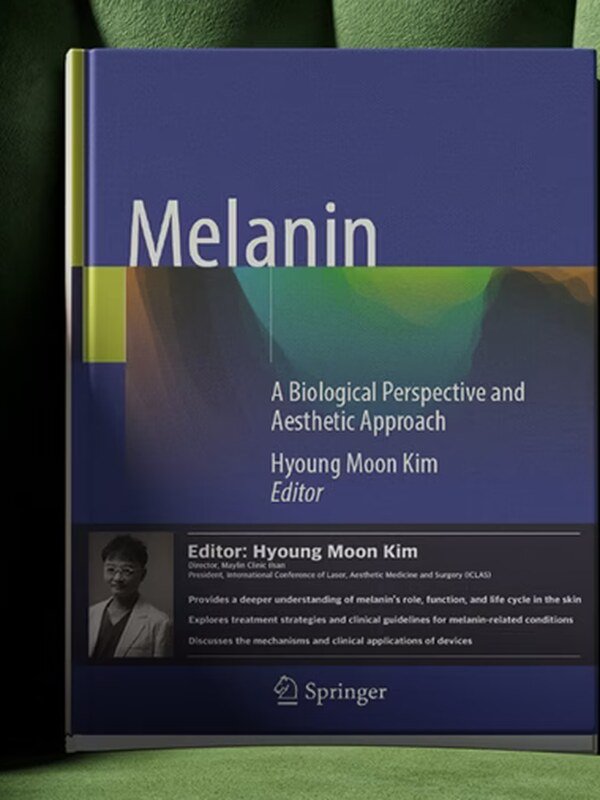
Our director edited the textbook on melanin
Melanin: A Biological Perspective and Aesthetic Approach, published by Springer, was edited by Dr. Hyoung Moon Kim — the director of this clinic.
Pigment is the problem he has spent his research career on. That does not make a laser work better, but it does mean the person deciding your settings understands why melasma rebounds and what makes it worse.
- Clinical Kim HM, Lee MJ. Therapeutic efficacy and safety of invasive pulsed-type bipolar alternating current radiofrequency on melasma and rebound hyperpigmentation. Medical Lasers. 2017.
- Lab study Byun KA, Kim HM, et al. Radiofrequency irradiation attenuated UVB-induced skin pigmentation by modulating ATP release and CD39 expression. Int J Mol Sci. 2023.
- Lab study Kim HM, et al. Radiofrequency irradiation mitigated UV-B-induced skin pigmentation by increasing lymphangiogenesis. 2022.
- Lab study Park HJ, Kim HM, et al. The combination of niacinamide, vitamin C and PDRN mitigates melanogenesis. Molecules. 2022.
These papers are about pigment biology and radiofrequency, not about laser toning specifically, and most are laboratory work. We list them because they are what our director actually published — see the full list on Journal Articles.
03
Before you decide
Laser toning is low risk per session. The risks come from doing too much of it, which is why we space sessions out and stop when we should.
-
Mottled pale spots
Too many sessions too close together can leave small pale patches where pigment cells have been over-suppressed. It is the best-documented complication of this treatment, and it is avoidable — larger spot sizes and longer intervals lower the risk.
-
Rebound
Melasma can return, and in some cases return darker, particularly if energy is pushed too high or sun exposure is not controlled. Daily sun protection is part of the treatment, not an optional extra.
-
It is maintenance
Recurrence after stopping is common. A completed course is not a cure, and anyone promising one is not describing melasma accurately.
We do not offer toning during pregnancy, over active infection or inflamed skin, or where a tan is still fading. If your pigment turns out to be something other than melasma, we will say so.
Before & After
Same camera, distance, lighting and head position. No retouching, no filters, published only with written consent.
Results shown are for one individual and the same course will not produce the same result in everyone. Each case states the number of sessions and the interval. Side effects can occur — see section 03.
Laser toning in Seoul: what visitors usually want to know
Laser toning works over a series of gentle sessions, and a trip is short. Here is what you can realistically do while you are here.
What one stay can do Sessions are usually one to two weeks apart. On a two-week trip that may mean two sessions — enough to start, assess how your skin responds and set a plan, but not a full course.
How Korean clinics approach melasma Gentle, low-energy laser toning is one part of it. Daily sun protection, suitable topical care and patience matter as much as the laser. More aggressive lasers can make melasma worse, which is why toning is kept gentle.
Continuing at home Low-fluence toning is offered in many countries. We give you a written summary of the settings and how your skin responded, so a doctor at home can continue sensibly.
Sun on holiday Sightseeing means sun. Wear a high-protection sunscreen and a hat on treatment days and after, or the treatment works against itself.
Flying and price There is no real downtime and flying the same or next day is fine. The cost depends on the number of sessions, so you get a clear quote after the consultation.
FAQ
How many sessions before I see anything?
Most people notice a change in overall brightness after three or four sessions, with melasma itself responding more slowly. A usual course is five to ten sessions spaced one to two weeks apart, and we review before booking each one rather than selling a package up front.
Does it hurt, and is there downtime?
Most people describe a warm, prickling sensation rather than pain, and no numbing is usually needed. The skin looks faintly pink for around an hour. Makeup the same afternoon is fine.
Will my melasma come back?
Very possibly. Melasma is a chronic condition and recurrence after stopping treatment is common, which is why we treat this as long-term management with maintenance sessions and daily sun protection rather than a one-off fix.
Can too much laser toning damage my skin?
Yes, and this is the honest reason we space sessions out. Frequent low-fluence treatment with a small spot can leave mottled pale patches where pigment cells have been over-suppressed. Larger spot sizes and longer intervals reduce that risk, and we would rather extend a course than compress it.
Can I have it while pregnant?
No. Melasma is common in pregnancy, but we do not treat it with laser until afterwards. We will talk through sun protection and safe topical options in the meantime.
How do Korean clinics treat melasma?
With a gentle, long-term approach: low-energy laser toning over a series, daily sun protection and topical care, rather than one strong treatment.
Can I see results on one trip?
You may notice brighter skin after a couple of sessions, but melasma responds slowly. A trip is best used to start and set a plan you can continue.
What lasers should I avoid with melasma?
Aggressive treatments that heat or injure the skin strongly can trigger rebound pigment. That is why melasma is treated with gentle settings and spaced sessions.
How long does laser toning last?
Melasma tends to return without maintenance and sun protection. Results last longer when both are kept up.
Laser toning or pico toning?
Both use gentle settings to break up pigment. Which suits you depends on your pigment and skin, and the doctor recommends one at the consultation.
Bring us the pigment you have already tried to fix
Melasma, sun damage and post-inflammatory marks look alike and are treated differently. We will tell you which one you have, and whether laser is the right answer at all.
Book a consultationGeneral information, not medical advice for your individual case. See our Medical Disclaimer and Medical Review Process.
This guide comes from Maylin Clinic Apgujeong, the Apgujeong branch of the Maylin Doctor Network in Gangnam, Seoul. You can meet our doctors before you book.
Medically reviewed by Hyoung Moon Kim, MD, PhD on .