
Skin Guide · Nov 2026
Skin Guide
Name the scar first
Icepick, boxcar and rolling scars sit at different depths and have different shapes. That is why one device rarely treats them all.
Texture
by
type
Maylin Apgujeong
Model portrait
Not a patient
Skin Guide · Acne
Acne Scar Types: Icepick, Boxcar and Rolling, and What Treats Each
Most depressed acne scars fall into three types. Icepick scars are narrow and deep, boxcar scars are wider with sharp edges, and rolling scars are broad, soft dips caused by bands pulling the skin down from below. Because each type has a different shape and depth, the treatment differs too, and most faces have a mix. Our acne scar treatment page explains how a plan is built; this guide explains the types behind it.
Maylin Apgujeong · Skin Guide
Where do the three names come from?
The icepick, boxcar and rolling system was set out by Jacob, Dover and Kaminer in the Journal of the American Academy of Dermatology in 2001. They sorted depressed scars by width, depth and three-dimensional shape, because those features decide which treatment can reach the problem. Later studies have shown that even trained doctors do not always agree on the shape of a single scar, so the names are a working guide, not a precise measurement. What matters is the principle: the shape of the scar points to the method.
What is an icepick scar?
Icepick scars are narrow, deep openings that look like a large pore or a small puncture. They are usually under about 2 mm across at the surface, but they extend vertically into the deep dermis, sometimes further. They often sit on the cheeks.
Because the opening is narrow and the base is deep, surface resurfacing alone tends to do little. Dermatology reviews describe methods that work on each scar individually, such as chemical reconstruction with a high-strength acid applied only inside the scar, or removing the scar with a small punch. A doctor decides whether these are suitable for you after seeing the scars.
What is a boxcar scar?
Boxcar scars are round or oval depressions with steep, well-defined edges and a fairly flat base. They are wider than icepick scars, often a few millimetres across, and can be shallow or deep. They are common on the cheeks and temples.
- Shallow boxcar scars often respond well to collagen-building treatments that soften the edges, such as RF microneedling or fractional resurfacing.
- Deep boxcar scars may need an individual technique first to lift or reshape the base, followed by resurfacing to blend the edges.
What is a rolling scar?
Rolling scars are wide, gently sloping dips that give the skin a wavy look, especially in side lighting. They are caused by fibrous bands that tether the dermis to the tissue underneath and pull the surface down. If you stretch the skin gently and the dip softens, it is often a rolling scar.
Because the cause is underneath, releasing the bands is the key step in many published approaches, a technique called subcision. Collagen-building energy and, in some cases, volume support help the surface stay level afterwards.
Most people have two or three scar types at once, so a good plan uses more than one method and treats in stages.
Acne scar types at a glance
Matching scar type to treatment
| Scar type | What it looks like | Approaches commonly used |
|---|---|---|
| Icepick | Narrow, deep, pore-like | Techniques applied to each scar; resurfacing afterwards to blend |
| Boxcar, shallow | Wide, flat base, sharp edge | RF microneedling, fractional resurfacing |
| Boxcar, deep | Wide, steep walls, deeper base | Individual lifting technique, then resurfacing |
| Rolling | Soft, wavy dips | Release of tethering bands, collagen-building energy |
| Raised (hypertrophic) | Firm bumps above the skin | Flattening treatments; not resurfacing alone |
Where does RF microneedling such as Potenza fit?
RF microneedling inserts fine needles into the skin and releases radiofrequency heat at the needle tips. The small channels and the heat together prompt the dermis to remodel and lay down new collagen, which softens the edges of boxcar scars and the slopes of rolling scars. Depth can be adjusted for different areas of the face.
Potenza is one RF microneedling device used for this. It is usually most useful as the base treatment in a course, repeated over several sessions, with other methods added for the deeper or narrower scars that it cannot reach on its own. It does not close a deep icepick scar by itself.
What about red or brown marks?
Flat red or brown marks left after a breakout are not scars in the textural sense. They are colour changes and usually fade or respond to different treatments. Many people have marks and true scars at the same time, and treating them in the right order helps. See red vs brown acne marks for that side of the question.
Why active acne should be settled first
New breakouts create new scars and inflame the skin, which raises the risk of irritation after scar treatment. Most plans calm active acne before starting resurfacing. Our acne treatment page covers that stage, and why the order matters explains the timing.
How many sessions, and how much improvement?
Scar treatment is gradual. Collagen remodelling takes weeks to months, so courses usually run over several sessions spaced weeks apart, and the final result is judged some months after the last one. Improvement is real but partial: the aim is smoother texture and less shadowing, not perfectly flat skin. The number of sessions depends on the scar types, their depth and how your skin heals. If you are visiting Seoul once, a doctor can tell you what one or two sessions can do and what would need follow-up.
FAQ
How do I know which acne scar type I have?
Look at the skin in side lighting. Pinpoint holes suggest icepick scars, sharp-edged craters suggest boxcar scars, and soft waves suggest rolling scars. A doctor confirms this in person, and most people have more than one type.
Which acne scar type is hardest to treat?
Icepick scars are generally the most stubborn, because they are deep and narrow. Deep boxcar scars can also need several methods.
Can RF microneedling treat all scar types?
It helps boxcar and rolling scars most. Deep icepick scars usually need an individual technique as well.
Can filler fix acne scars?
It can lift some rolling scars temporarily by adding volume under them. It does not change the scar itself and is not suited to icepick scars.
Can I treat acne scars in one trip to Seoul?
You can start, and one session gives a modest change. Most scars improve over a course, so a doctor will explain what to expect from the time you have.
Is there downtime after scar treatment?
It depends on the method. After RF microneedling, redness and small marks are common for a few days. Your doctor will tell you what to expect for your plan.
Plan a visit: send close-up photos of your scars in daylight and side lighting on WhatsApp, LINE, or KakaoTalk, and we will explain which scar types we see and how a plan could look, in English, before you land.
This guide comes from Maylin Clinic Apgujeong, the Apgujeong branch of the Maylin Doctor Network in Gangnam, Seoul. You can meet our doctors before you book.
General information, not medical advice for your individual case. What is appropriate depends on your history and on an examination. See also our Medical Disclaimer and Medical Review Process.
Published
Medically reviewed by Hyoung Moon Kim, MD, PhD on .
From our channels

YouTube · from our channel
When BTX Met Energy, episode 4: choosing the right toxin for EBD treatments
YouTube episode on choosing the right botulinum toxin for energy-device treatments
Watch on YouTube →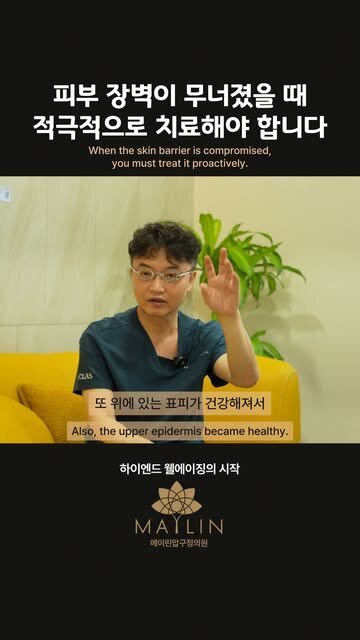
Instagram · from our channel
What to do when the skin barrier is compromised
Instagram reel explaining how to treat a damaged skin barrier
Watch on Instagram →Not sure this is the right treatment?
That is what the consultation is for. We will look at your skin and tell you what we would recommend and what we would leave alone, including if the answer is nothing for now.
Book a consultation