Home›Treatments›Acne Treatment
Acne & Tone
Acne Treatment
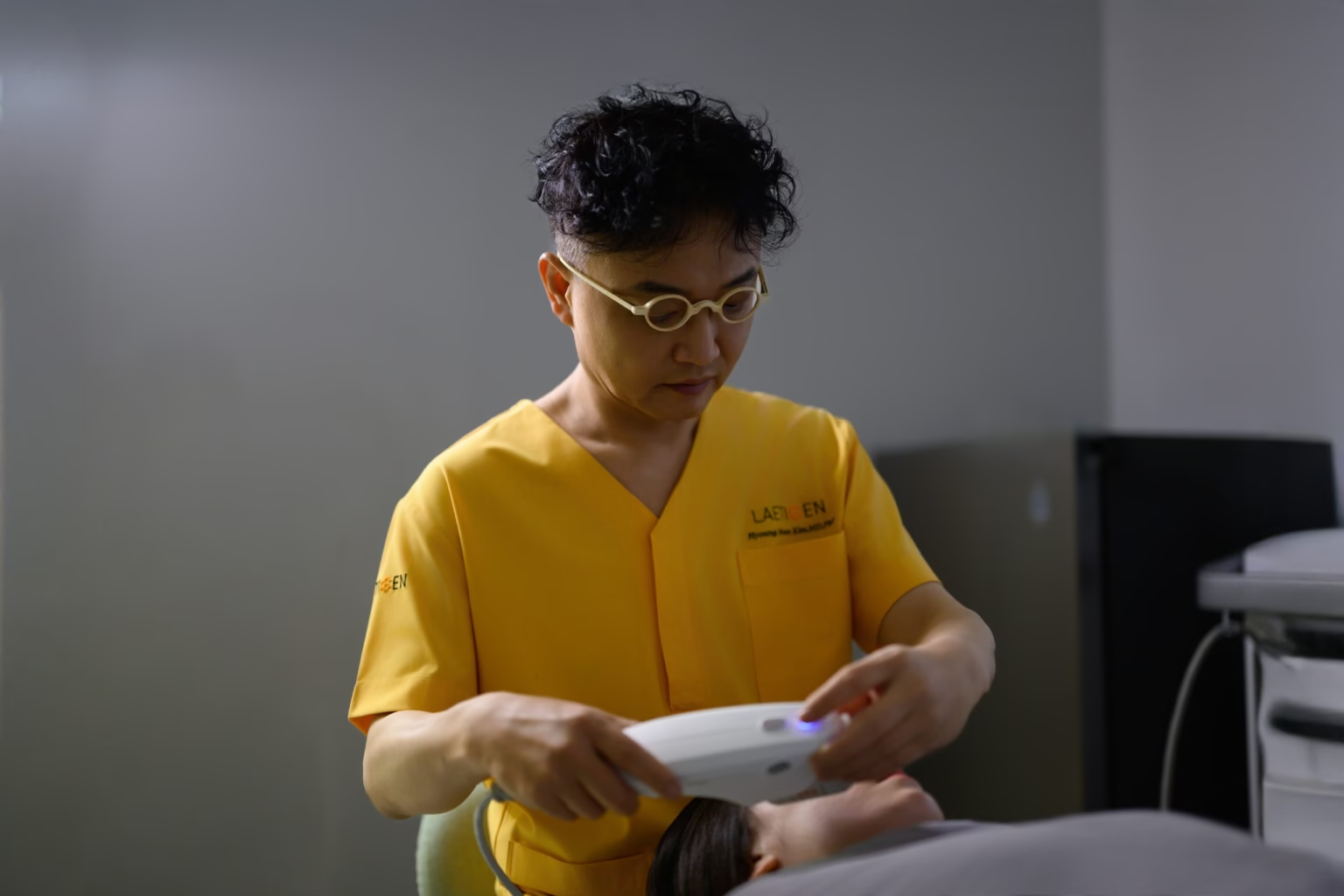
Laser and light to calm active acne — targeting the oil, the bacteria and the inflammation, over a course and as part of a plan.
Procedure time
About 20–30 minutes
Anaesthesia
Usually none; cooling for comfort
Sessions
A course, spaced a few weeks apart
Downtime
Mild redness for a few hours
What it is
Treating the causes, not just the spot
Acne comes from a few things happening together: too much oil, a pore that blocks, bacteria, and inflammation. Our laser and light-based treatment is aimed at those drivers — calming inflammation, reducing overactive oil glands, and settling the redness left behind.
It is a doctor-led, medical approach, chosen by the kind of acne you have. Light-based treatment is not a stand-alone cure for every case, and where topical or oral medication is the right backbone, we will say so and use the device work alongside it.
It works over a course, not in one visit. The goal is fewer and calmer breakouts, and skin that is easier to keep clear.

How it works
Three things it is aiming at
Different wavelengths do different jobs, which is why the plan is matched to your acne rather than fixed.
-
Calms inflammation
Light targeted at inflamed lesions and the redness around them helps settle the active, angry part of acne — the part that is sore and most visible.
-
Reduces oil and bacteria
Certain wavelengths act on the oil glands and on the bacteria involved in acne, reducing the conditions a breakout needs to form.
-
Settles the aftermath
Over the course, breakouts become fewer and the marks they leave behind fade sooner. Scarring is a separate problem with its own answers.
What it helps
Where it fits
Best for inflammatory and oily acne. What suits you, and whether medication should be part of the plan, is decided after your skin is examined.
Inflamed spots
Red papules and pustules, the sore active lesions.
Oily skin
Overactive oil that keeps feeding breakouts.
Post-acne redness
The flat red or pink marks left after a spot settles.
Comedones
Blackheads and whiteheads, treated as part of a plan.
Back & body
Acne beyond the face, where it is common.
Keeping it clear
Maintenance once the skin has settled.
Who it is for
A good fit for active, inflammatory acne
It suits some cases and not others. Better to hear that at consultation than after a course.
- Inflamed, oily acne rather than the odd blackhead
- Red marks left behind after spots settle
- Anyone who would rather avoid, or add to, medication
- People able to commit to a course rather than one visit
- Those who want a doctor-led plan, not a single gadget
- Visitors who can start a course and continue care at home
Not suitable, or not yet
- Severe cystic or nodular acne, which usually needs medical treatment first
- Recent oral isotretinoin: some device work is delayed until after it
- Pregnancy or breastfeeding: the plan is adjusted, and some options are avoided
- A tendency to pigment easily: settings are chosen carefully to protect the skin
- Active scarring as the main concern: see Acne Scar Treatment
Acne is a medical condition. This treatment is often one part of a plan that may include prescribed skincare or medication.
Planning it around a trip
Acne treatment in Seoul: what visitors usually want to know
Acne is treated over a course, and a trip is short. Here is how we make the days you are in Seoul count, and what carries on once you are home.
Calm it first, then treat the marks
The approach in Korean clinics is usually medical first: settle active, inflamed breakouts before moving on to scars and marks. Lasers for scarring work better, and more safely, on skin that is not actively inflamed.
What one visit can do
In one consultation the doctor can assess your skin, start in-clinic treatment to calm inflammation and reduce oil, and set out a plan. Several sessions about a week or two apart give more, so if your stay is longer, we space them across it.
Bring your current routine
Tell us about any prescription you use, especially isotretinoin, antibiotics or retinoids. Some treatments are postponed while you are on them. Photos of your skin at its worst also help the doctor see the pattern.
Continuing at home
We give you a written summary of what was done and what to continue, so your own dermatologist can pick it up. Daily skincare and sun protection matter as much as anything done in the clinic.
About price
The cost depends on the treatments chosen and how many sessions you have, so you get a clear quote after the consultation.
Go deeper
Related at Maylin
Active acne, the marks it leaves and the scars it can cause are three different problems. These are the treatments they connect to.
-
Scarring
Acne scar treatment: rebuilding lost collagen
For the pits and dents left after acne — a separate problem from active breakouts.
Read now → -
Tone
Laser toning for pigment and uneven tone
For brown marks and melasma, where post-acne pigment is the concern.
Read now → -
Skin quality
Juvelook skin booster: collagen, not filler
For skin quality once acne is under control — not for active breakouts.
Read now → -
Evidence
The research behind our practice
Peer-reviewed papers our doctors have authored, with study types labelled.
Read now →
Questions
Asked most often
Does it hurt?
Most laser and light acne treatments feel like a warm snap, eased by cooling. It is generally well tolerated, and settings are adjusted to your comfort.
How many sessions will I need?
Acne responds to a course rather than a single visit, usually spaced a few weeks apart. The number depends on the type and severity, and is agreed at consultation.
Is this a cure for acne?
Acne is a medical condition that is managed rather than cured overnight. Laser and light can reduce and calm it, and often works best as part of a plan that may include prescribed skincare or medication.
Can I use it with my acne medication?
Often, yes, and the two can complement each other. Tell us everything you are using — especially oral isotretinoin, past or present — as it affects timing.
Will it help the marks left behind?
Flat red or brown marks (not true scars) often fade faster with treatment. Indented scars are a different problem — see Acne Scar Treatment.
Is there downtime?
Usually little — some redness or warmth for a few hours. More intensive options can involve a day or two of visible redness, which is explained beforehand.
What do Korean clinics do for cystic acne?
Deep, painful cysts are usually treated medically first, sometimes with a small in-clinic injection to settle a single cyst, alongside treatment to calm inflammation. Lasers and scar treatments come once the skin is calmer.
Can I see results on one trip?
You may notice calmer, less oily skin within your stay, but acne responds over weeks. One visit is best used to assess, start treatment and set a plan you can continue.
Should I treat active acne or scars first?
Active acne first. Treating scars over inflamed skin raises the risk of irritation and new marks.
Is acne treatment cheaper in Korea?
Many visitors find it is. The cost depends on the plan, so you get a quote after the consultation.
Can I fly after a session?
Yes. Most acne treatments have little or no downtime. Avoid heavy makeup and strong sun on the day.
Evidence
What the published work shows
The papers behind the statements on this page — including where the evidence is mixed, because for acne it honestly is.
Show the papersHide the papers
-
Laser and other light therapies for the treatment of acne vulgaris: systematic review
A systematic review of randomised trials: light and laser can help inflammatory acne, with the most consistent results from combination and photodynamic approaches rather than light alone.
What it does not show
it reports mixed results across devices and mostly short-term follow-up; it does not prove one protocol works for everyone.
-
Prospective randomized controlled study of acne vulgaris treated with a 1064-nm Nd:YAG laser assisted with a topically applied carbon suspension
A controlled trial of a 1064-nm laser approach showing improvement in acne, supported by skin-sample findings — the kind of laser toning used in this clinic.
What it does not show
it is a single-device study in one group; results and settings differ between patients.
-
Evidence-based review of lasers, light sources and photodynamic therapy in the treatment of acne vulgaris
An evidence review setting out which optical treatments have support for acne and how strong that support is — the basis for using these as part of a plan rather than a cure.
What it does not show
it is a review of its time; device technology has moved on since, and it does not replace individual assessment.
Acne is a medical condition; device availability and naming differ by country. The full list of our doctors’ own publications is on our Journal Articles page.
Links checked 22 September 2026.
From our channels

YouTube · from our channel
What to do about a droopy eyelid after botox
YouTube short on treating eyelid ptosis after botox
Watch on YouTube →
Instagram · from our channel
Aiming for results that do not look done
Instagram reel about natural, inconspicuous treatment results
Watch on Instagram →Not sure where to start with your acne?
That is what the consultation is for. We will look at your skin and set out a plan — what to treat with light or laser, what to manage with skincare or medication, and what to leave alone for now.
Book a consultation
General information, not medical advice for your individual case. Acne is a medical condition; device and medication availability differ by country. See our Medical Disclaimer and Medical Review Process.
Medically reviewed by Hyoung Moon Kim, MD, PhD on 22 September 2026.
Written at Maylin Clinic Apgujeong, where every consultation is held in English. Read how the clinic works or how to find us.